Roses have been a powerful symbol in literature for hundreds of years. Writers and poets often use roses to represent love, beauty, and sometimes even loss. In poems such as A Red, Red Rose by Robert Burns, the rose is used as a metaphor for deep and lasting love. Similarly, One Perfect Rose by Dorothy Parker uses the image of a single rose to express both romance and subtle disappointment.
These works show how roses can carry emotional meaning beyond their physical appearance. By using roses as symbols, writers are able to communicate complex feelings in a simple and relatable way.
As late I rambled in the happy fields,
What time the sky-lark shakes the trumulous dew
From his lush clover covert; - when anew
Adventurous knights take up their dinted shields:
I saw the sweetest flower wild nature yields,
A fresh-blown musk-rose; 'twas the first that threw
Its sweets upon the summer: graceful it grew
As is the wans that queen Titania wields.
And, as I feasted on its fragrancy,
I thought the garden-rose it far excell'd:
But when, O Wells! thy roses came to me
My sense with their deliciousness was spell'd:
Soft voices had they, that with tender plea
Whisper'd of peace, and truth, and friendliness unquell'd.
In this poem, John Keats reflects on the meaning behind receiving roses as a gift from a friend. The flowers symbolise more than just beauty, representing thoughtfulness, appreciation, and emotional connection.Keats shows how something simple, like a rose, can carry deeper personal meaning when it is given with intention.
O my luve is like a red, red rose That's newly sprung in June; O my Luve is like the melody That's sweetly played in tune. So fair art thou, my bonnie lass, so deep in luve am I; And I will luve thee still, my dear, Till a' the seas gang dry. Till a' the seas gang dry, my dear, And the rocks melt wi' the sun; I will love thee still, my dear, While the sands o' life shall run. And fare thee weel, my only luve! And fare thee weel awhile! And I will come again, my luve, Though it were ten thousand mile.
Robert Burns uses the image of a red rose to express strong and enduring love. The rose represents beauty and freshness, allowing Burns to compare his feelings to something natural and timeless. Through repetition and simple language, the poem emphasises how deep and lasting this love is meant to be. The rose becomes a symbol not only of romance, but also of loyalty and commitment over time. This makes the poem memorable and relatable, as it connects emotion with a familiar image from nature.
The red rose whispers of passion, And the white rose breathes of love; O, the red rose is a falcon, And the white rose is a dove. But I send you a cream-white rosebud With a flush of its petal tips; For the love that is purest and sweetest Has a kiss of desire on the lips.
In this poem, the white rose is used as a symbol of purity, innocence, and quiet strength. John Boyle O’Reilly explores how something delicate in appearance can still hold strong meaning and emotional depth. The simplicity of the white rose reflects ideas of honesty and inner values rather than outward beauty. The poem encourages readers to look beyond appearances and consider the deeper significance of what they see. In this way, the rose becomes a symbol of both moral strength and gentle resilience.
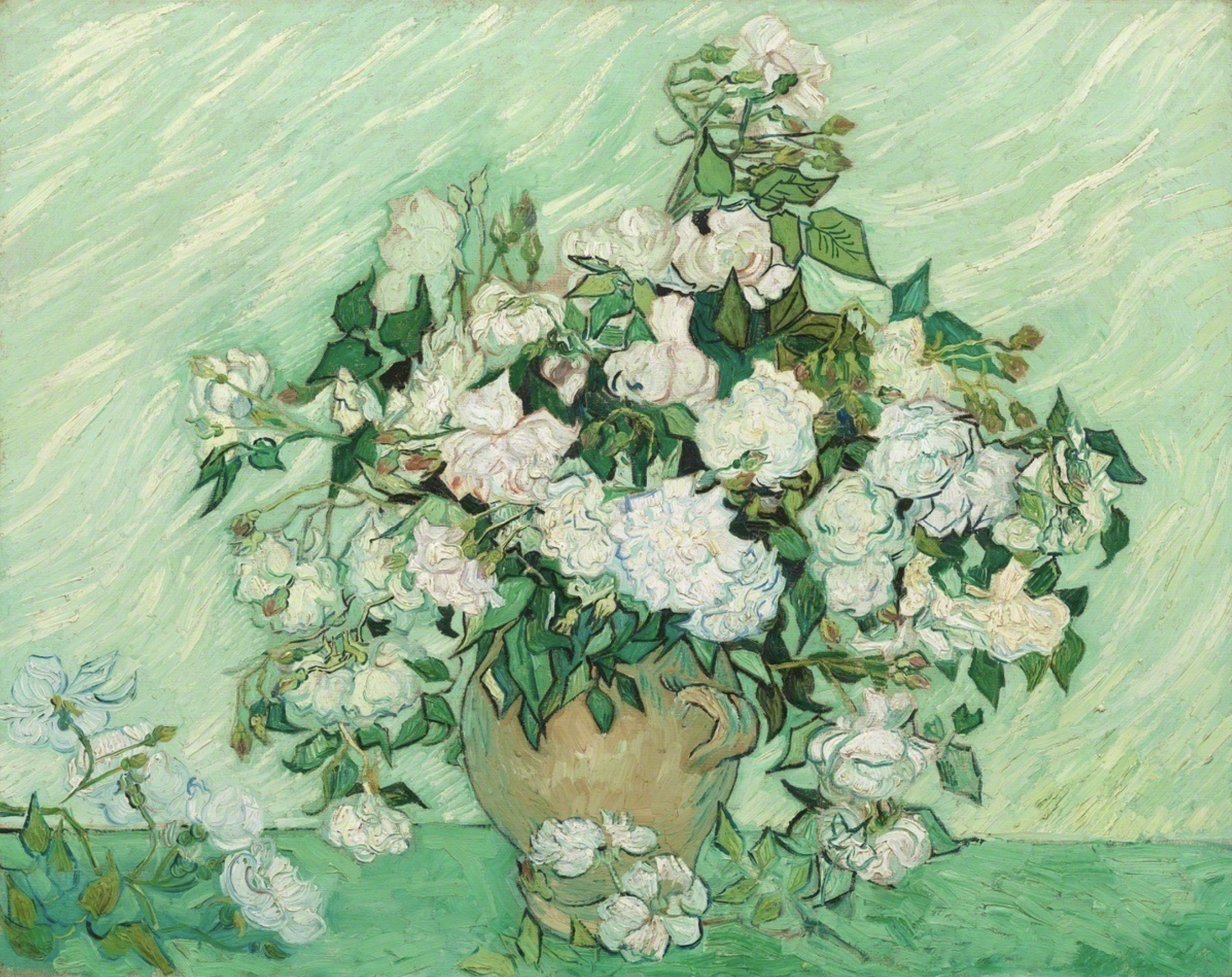
In Roses (1890), Vincent van Gogh focuses on the natural beauty and delicate form of the flowers. His use of soft colours and visible brushstrokes creates a sense of texture and movement, making the roses feel alive. Rather than aiming for perfect realism, van Gogh expresses emotion through colour and style. The painting gives a calm and peaceful impression, while still capturing the complexity of nature. This approach shows how roses can be both visually beautiful and emotionally expressive.
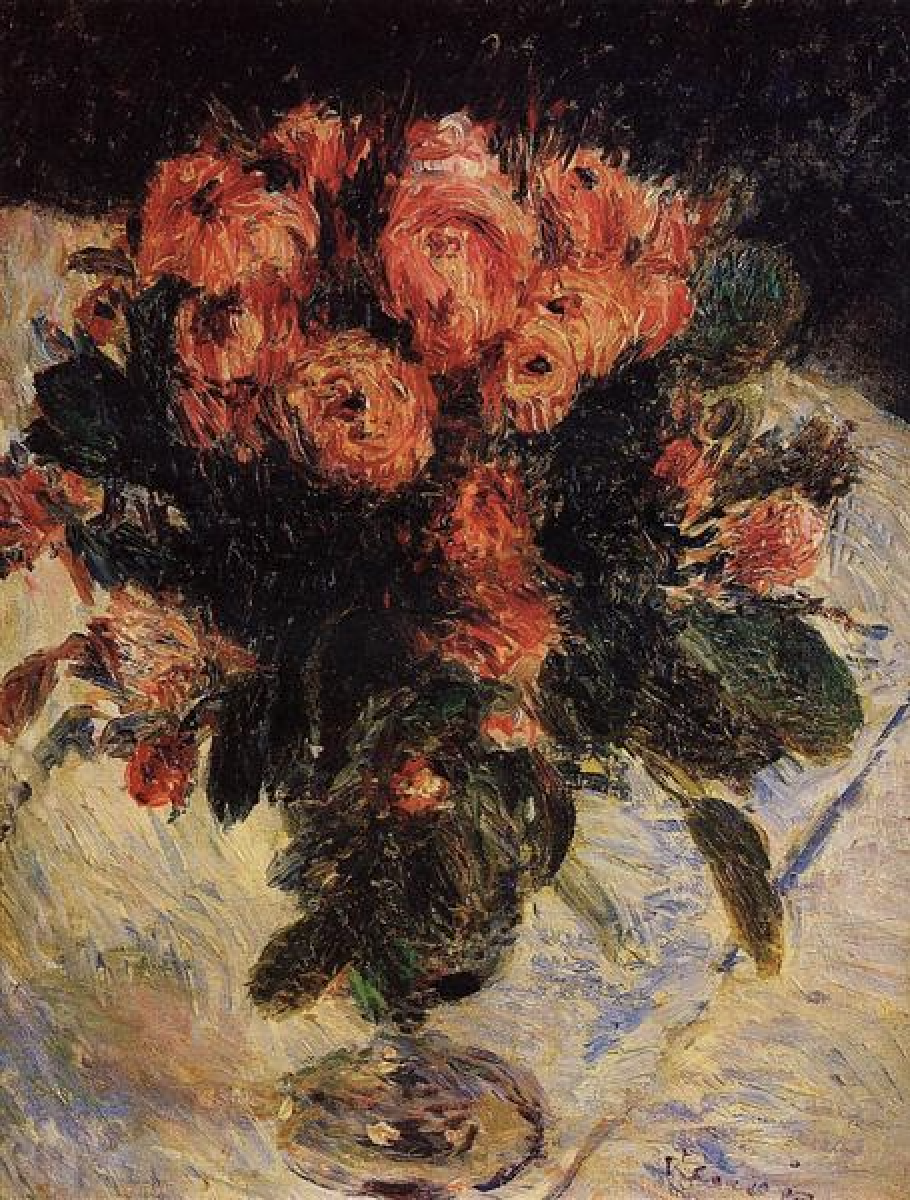
View More DetailsPierre-Auguste Renoir’s Roses (1890) highlights the gentle and romantic qualities of the flowers. Using soft lighting and blended colours, Renoir creates a warm and inviting atmosphere. His impressionist style focuses more on the feeling of the scene rather than precise detail, allowing the viewer to experience the beauty of the roses in a more emotional way. The painting captures a moment of natural elegance and softness. Through this, roses are presented as symbols of beauty, warmth, and quiet joy.
View More Details
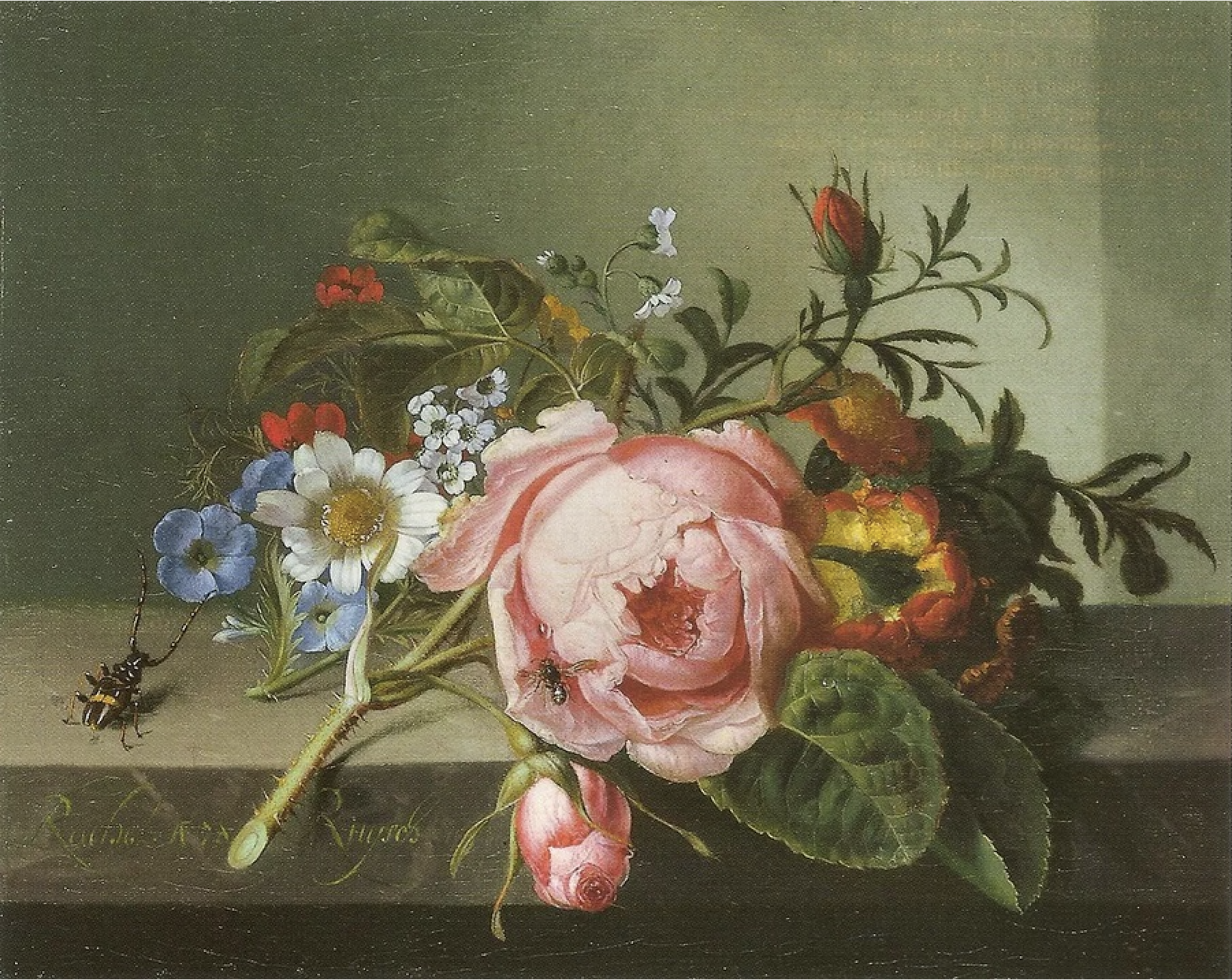
In this still life, Rachel Ruysch combines roses with insects and other natural elements to create a detailed and realistic composition. The inclusion of a beetle and bee adds movement and life to the scene, making it feel more dynamic. At the same time, the painting reflects the idea that nature is both beautiful and temporary. The delicate petals of the roses contrast with the presence of insects, suggesting the passing of time. This gives the artwork a deeper meaning beyond its visual appearance.
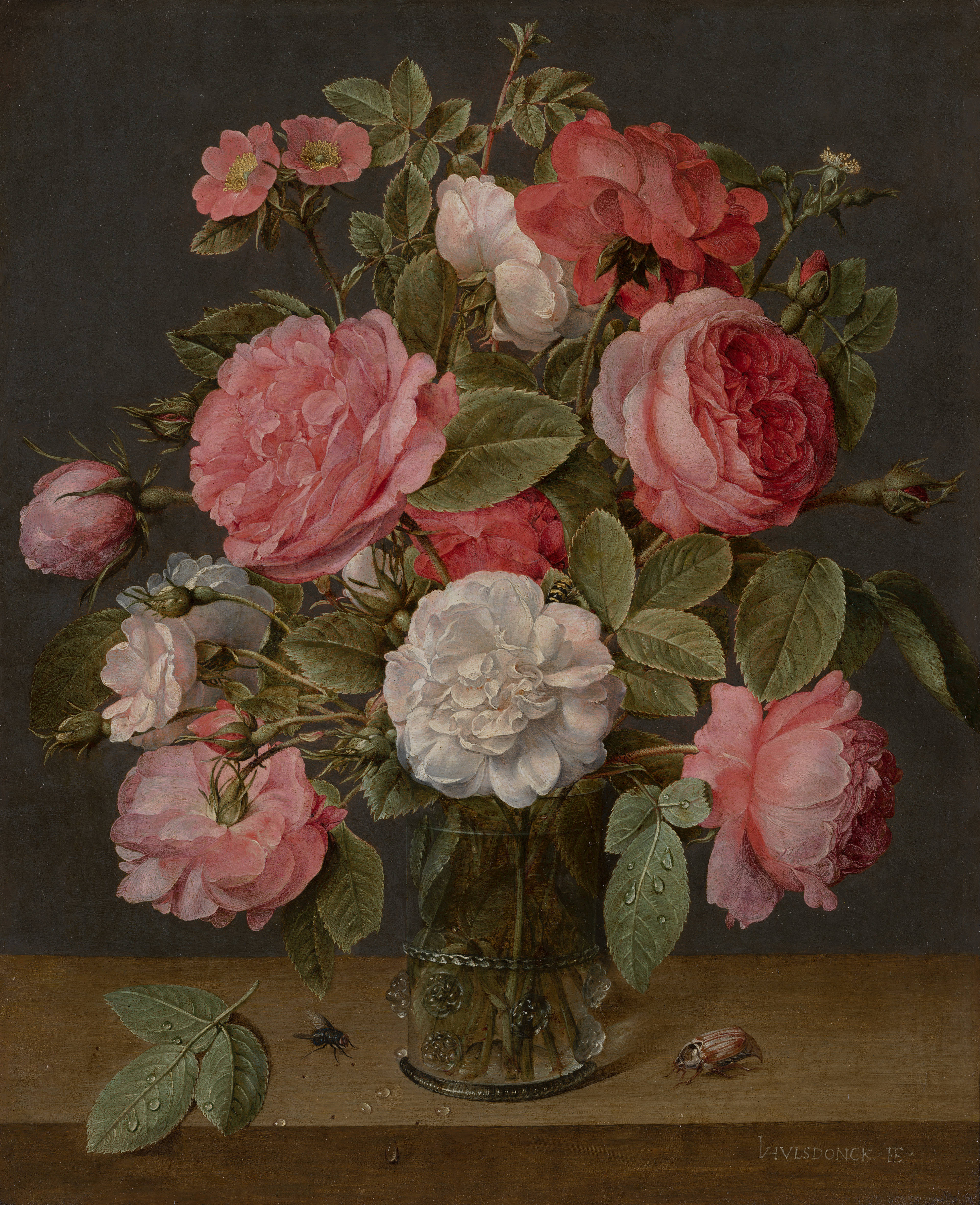
View More DetailsJacob van Hulsdonck’s still life painting presents roses arranged carefully in a simple glass vase. The composition draws attention to the colour, texture, and shape of the flowers, showing a strong focus on detail. At first glance, the painting appears to celebrate beauty and elegance. However, like many still life works, it also suggests that this beauty is temporary. The roses will eventually fade, reminding viewers of the passing nature of time and life.
View More Details
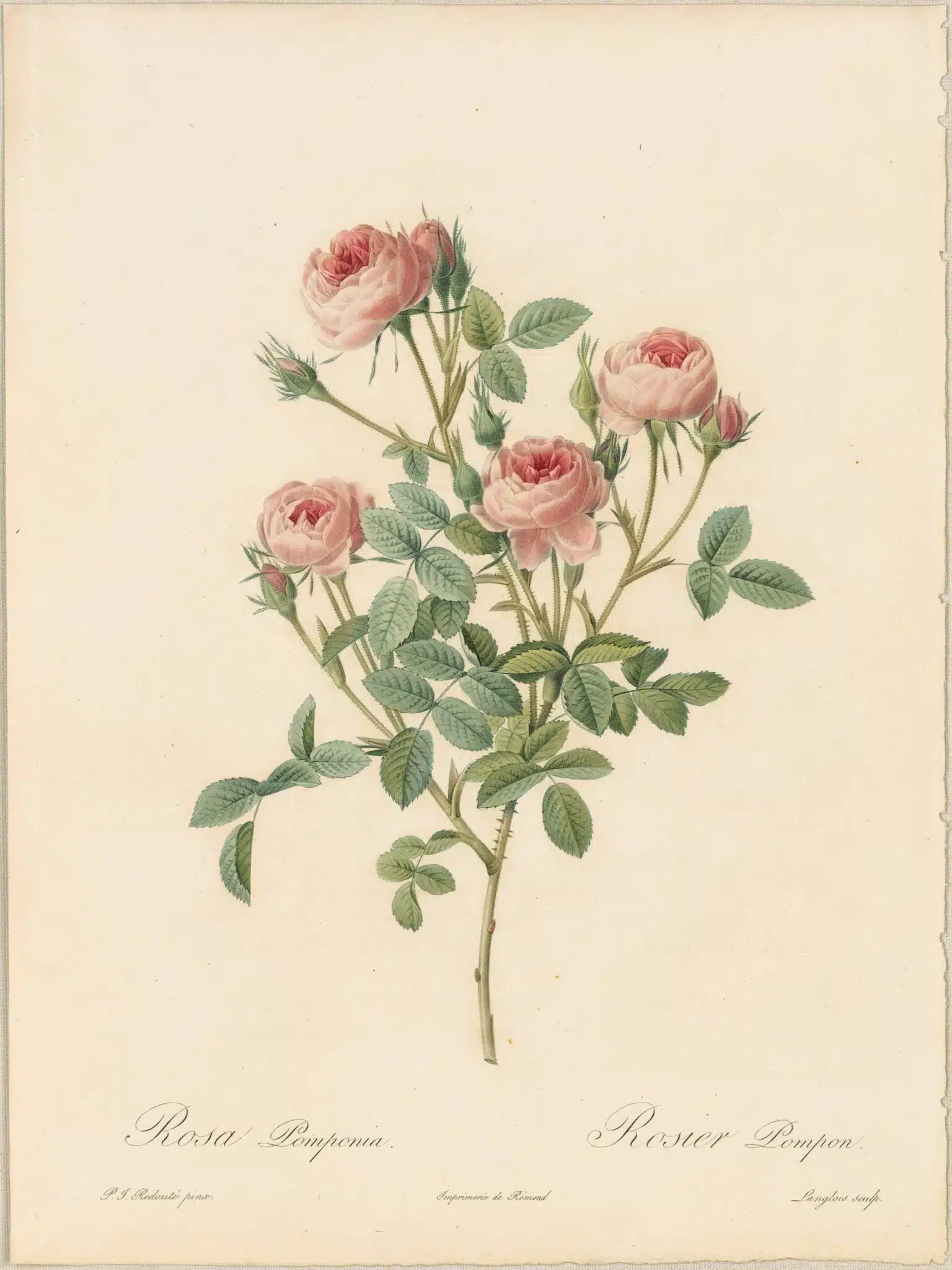
Pierre-Joseph Redouté’s Les Roses is a collection of detailed botanical illustrations that carefully study different types of roses. Unlike more expressive paintings, his work focuses on accuracy, structure, and scientific observation. Each illustration shows the shape, colour, and form of the rose with great precision, making it both artistic and educational. At the same time, the elegance of his drawings highlights the natural beauty of the flowers. This combination of art and science makes his work especially significant in the study of plants.
View More of Redouté’s Rose Illustrations